
Thank you for your patience while AquaStream was under maintenance.


- Prevent overcrowding and stress for your fish.
- Maintain a healthy biological balance in your tank.
- Avoid water quality issues and disease outbreaks.

- Accurately determines the volume of an aquarium.
- Assists in selecting the correct filter size for optimal water quality.
- Essential for accurate dosing of medications and treatments.

VERY IMPORTANT (click to read): Read before you apply our recommendations!
Every aquarium is unique. This tool accounts for real-world factors like tank shape, fish load, filter media, and plumbing bends to provide realistic recommendations.

💡 Actual results may vary slightly. AquaStream is not liable for equipment or livestock issues caused by incorrect use. Feedback or suggestions? Write to support@aquastream.in
Why Aquarium Pump/Filter Flow Rate Matters
Maintaining the correct flow rate in your aquarium is crucial for the health and well-being of your aquatic pets. Proper filtration and circulation:
- Too little: stagnant water, poor oxygen, algae blooms
- Too much: fish stress, uprooted plants
- Just right: healthy ecosystem with balanced oxygen, waste removal, and nutrient flow
- Filter turnover (through your filter): removes waste and keeps water clear
- Tank circulation (powerheads/wavemakers): moves water around rockwork and prevents dead zones. Reef tanks often need higher circulation than basic filter turnover.
Why do Some Aquariums Thrive While Others Struggle?
Often, it comes down to one simple factor: water flow. Our easy-to-use filter flow rate calculator helps you determine the ideal aquarium filter flow rate based on your specific tank setup.
What you’ll get: Minimum, recommended, and maximum target flow (turnover). Suggested pump rating that accounts for real-world loss. Optional adjustments for head height + plumbing resistance
How to Use the Flow Rate Calculator?
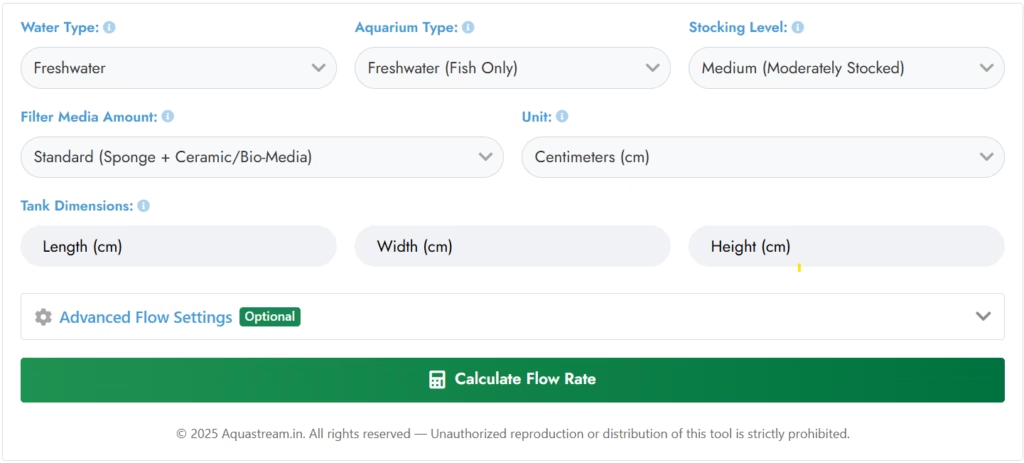
- Enter Tank Volume – in litres or gallons.
- Select Aquarium Type – freshwater, planted, saltwater reef, etc.
- Choose Filter Media Amount – minimal, standard, or heavy.
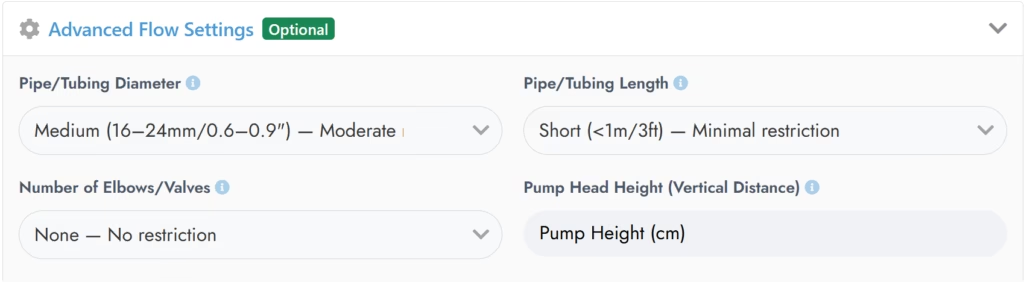
- Advanced Settings (Optional) – pump height, pipe size, bends/valves.
- Click Calculate – get instant results for minimum, recommended, and maximum flow.
Filter media type general classification:

Minimal: Sponge / poly floss only (very low restriction). Standard: Sponge + ceramic/bio-media (moderate restriction). Heavy: Dense pads, fine polishing pads, multiple stages (high restriction).

💡 More filter media = higher resistance = stronger pump needed.
Quick Targets by Setup (Recommended Starting Point)
Use these as a starting point, then fine-tune by observing fish, plants, and debris buildup:
- Betta/fry / gentle fish: ~2–4× turnover (soft output, spray bar helps)
- Community freshwater: ~4–8× turnover
- Planted (CO₂ focused): often lower surface agitation to retain CO₂; aim mid-range but diffuse the flow
- Cichlids / messy eaters: higher turnover helps move waste into filtration
- Reef (LPS/SPS): circulation demand can be much higher; use wavemakers for in-tank movement
What Makes AquaStream Calculator Different?
Most calculators only do: Tank volume × a fixed turnover. AquaStream improves accuracy by factoring in what actually reduces flow in real tanks:
- Tank type (gentle vs high-energy setups)
- Media resistance (minimal vs standard vs heavy)
- Plumbing/head loss (height, bends, pipe diameter)
- Real-world performance drop (filters rarely run at box rating)
💡 Bonus Tip: Use the “Suggested Pump Size” when shopping — it’s designed to land you closer to your target once the filter is loaded and running.
When to Ignore the Calculator:
- Odd-shaped tanks – Hexagons/long rivers need custom solutions
- Speciality species – Some fish (like hillstream loaches) crave extreme flow
- If your fish look stressed, no math beats observing your pets
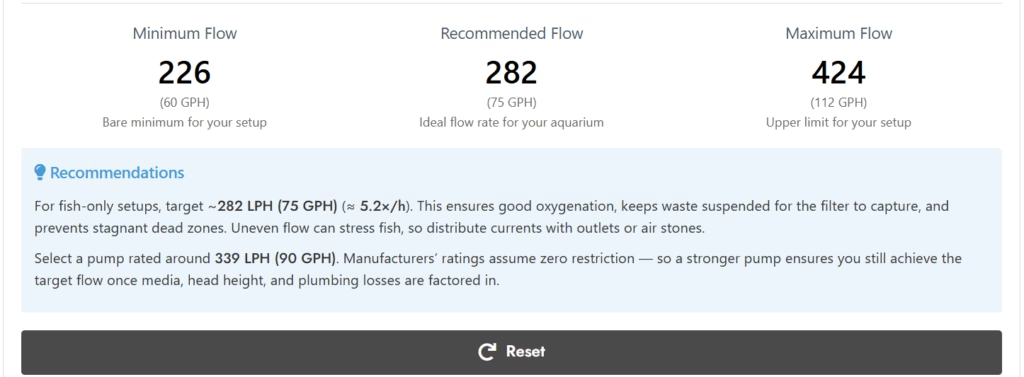
Results – Understanding Flow Recommendations
| Flow Type | Target Turnover | What It Means | Best For |
|---|---|---|---|
| 💧Minimum | 2–3× | Gentle movement, basic waste capture | Betta tanks, quarantine, fry, delicate fish |
| 🌊 Recommended | 4–8× | Balanced clarity + oxygenation | Most community tanks, planted (with diffused output) |
| 💥Maximum | 10–20× | Strong movement, faster debris transport | Cichlids, river-style tanks, heavy bioload |
🪸Reef note: many reef setups require significantly more circulation than filter turnover; use wavemakers/powerheads to reach coral needs. For marine use, start at 80% of the recommended flow, then adjust based on fish behaviour.
Actual Flow vs Rated Flow (Real-World Loss)
Filters and pumps are usually rated at ideal conditions. In real setups, flow drops due to media, clogging, height, and plumbing.
Quick estimator (simple):
- Actual flow ≈ Rated flow × 0.6 to 0.85
(closer to 0.6 for heavy media + head height; closer to 0.85 for minimal restriction)
If you want to measure actual flow (quick test):
- How long does it take to fill a bucket/jug from the outlet
- Convert to LPH/GPH and compare to your target
Example Application
- 🐠 Community Tank (200L) → Recommended: 800–1600 L/hr
- 🪸 SPS Reef (300L) → Maximum: 3000–6000 L/hr
- 🌊 Hillstream Biotope → May exceed maximum, to mimic natural river flow
Quick Guide – To Ensure Optimal Filtration
A: Filter Media Matters: How Density Affects Flow
The amount of filter media you use plays a crucial role in determining the ideal flow rate. More media requires a higher flow rate to ensure proper water circulation and filtration. Use the tooltips next to the “Filter Media Amount” field to understand how low, medium, and high media amounts affect your flow rate.
Cartridge filters tend to lose flow faster as they trap fine debris. If your cartridge clogs quickly, your real flow may drop well below the rating. Either clean it more often, increase pre-filtration (coarse sponge), or size up the pump to maintain your target turnover.
B: Beyond Aquariums: Applications for Pools & Sand Filters
While this calculator is designed for aquariums, the principles of filter flow rate calculation apply to other filtration systems. If you’re looking for a pool filter flow rate calculator or a sand filter flow rate calculation, the general concept of turnover rates and media volume is still relevant. Our updated calculator makes it easier than ever to understand and apply these principles.

Frequently Asked Questions
1. General Use
What is the purpose of the Aquarium Flow Rate Calculator?
The calculator helps you determine the ideal flow rate for your aquarium filter based on your tank’s volume, type, and the amount of filter media. This ensures proper water circulation, oxygenation, and filtration for a healthy aquatic environment.
Is this calculator free to use?
Yes, completely free, no registration or download needed.
Can I use this calculator on mobile devices?
Yes, the calculator is fully responsive and works seamlessly on desktops, tablets, and mobile devices.
How do I calculate filter flow rate (the simple way)?
Take your tank volume and multiply it by your target turnover. Example: 200 L × 6× = 1200 LPH target.
Is filter turnover the same as circulation?
No. Turnover is flow through filtration. Circulation is in-tank movement from powerheads/wavemakers (especially important in reefs).
2. Technical Questions
How does aquarium type affect flow rate?
Different aquarium types (e.g., freshwater, saltwater, planted, reef) have varying filtration needs. For example, planted tanks require higher flow rates to distribute nutrients. Reef Tanks: Need strong flow for coral health. Fish-Only Tanks: Require moderate flow for waste removal.
What is filter media, and why does it matter?
Filter media refers to the materials (e.g., sponges, bio-balls, ceramic rings) inside your filter that trap debris and host beneficial bacteria. The amount of media affects the flow rate: Low Media: Minimal filtration, lower flow rate needed. Medium Media: Standard filtration, moderate flow rate. High Media: Heavy filtration, higher flow rate required.
Why does pipe size matter so much?
Narrow pipes reduce flow just like drinking through a straw. Larger pipes = less resistance.
What if I get an error message?
If you see an error message, ensure all fields are filled with valid numbers. Double-check your unit selection. Avoid negative values or extremely large numbers.
How do I calculate the flow rate of a cartridge filter?
Use rated flow as a start, then assume a bigger real-world drop as the cartridge loads up. If possible, measure outlet flow with a timed container test and adjust cleaning frequency or pump size.
What turnover should I use if I have a high bioload?
High bioload tanks often need higher turnover and/or extra circulation to push waste into filtration.
3. Compatibility
Can I use this for saltwater aquariums?
Yes, fully supports both freshwater and marine systems.
Can I use this for turtle tanks or ponds?
Yes. For turtles, aim 15–25% higher than recommended because they’re messy eaters. For ponds, use the same turnover logic but scale for debris and head height.
What is the ideal aquarium filter flow rate?
It depends on the tank type. Most freshwater tanks do well with 4–8× turnover per hour, while reef tanks may need 10–20× or more.
What’s the ideal flow rate for a betta tank?
Bettas prefer gentle currents. Stay near the minimum turnover with smooth distribution.
How much flow for African cichlids?
They thrive with higher oxygen. Aim toward the upper recommended range (8–10×).
Do corals need maximum flow?
SPS corals benefit from strong, alternating flow (20×+), while soft corals prefer moderate circulation.
4. Troubleshooting
What if my aquarium type isn’t listed?
If your aquarium type isn’t listed (e.g., a custom setup), choose the closest option or consult a professional for tailored advice.
My tank isn’t listed – now what?
Choose the closest match: Shrimp tank? Use “Planted”, African cichlids? “High Bio-Load”, Mixed reef? “SPS Dominant” is safe.
My fish seem stressed despite correct flow; what now?
Reduce outlet pressure or redirect the nozzle. Observe fish behaviour; it’s the best indicator of comfort.
About Aquastream
AquaStream is built by hobbyists focused on practical, India-friendly aquarium tools. We update our calculators based on feedback and real-world tank results. Email suggestions to support@aquastream.in.